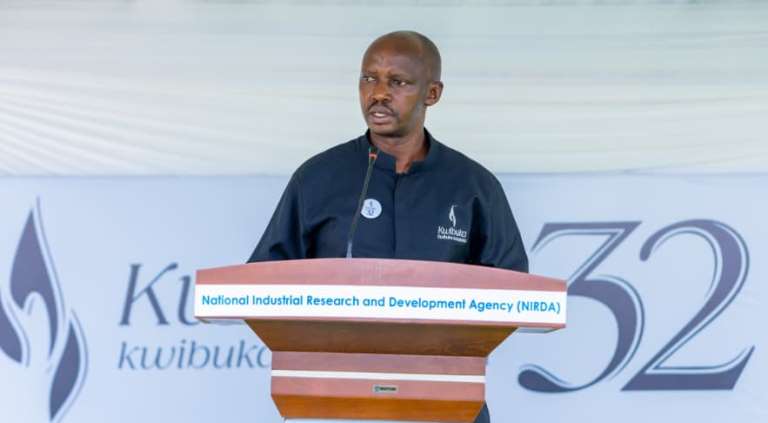

During a commemoration event held on May 15, 2026, to honor former employees of IRST, now known as NIRDA, who were killed during the 1994 Genocide against the Tutsi, a survivor identified as Nyirakariza questioned why some people still deny the genocide despite the atrocities happening openly in public.

Nyirakariza shared that he was 17 years old during the genocide and had previously worked in the IRST canteen after being denied the opportunity to continue his studies because of discrimination against Tutsi.

He explained that during the genocide he hid in different locations including the forests around NIRDA, CHUB Hospital, the prefecture offices, and Irango, where he witnessed horrific killings and acts of violence.

“I saw mothers who had just given birth being taken away to be killed. I saw babies dumped in a field, and Tutsi prisoners massacred in prison,” he said.
He also recounted how people were deceived into believing they were being taken to safe places, only to be murdered. He added that some women and girls hiding in Irango were sexually abused by those who were supposed to protect them.
Following his testimony, Nyirakariza questioned why genocide denial still exists despite the crimes having occurred publicly and in front of many witnesses.
The Vice Mayor of Huye District in charge of Economic Development, André Kamana, said genocide ideology and denial remain punishable crimes and urged Rwandans to continue promoting unity and reconciliation.
He emphasized that fighting divisionism is essential to building a stronger and peaceful Rwanda.
As part of the commemoration activities, NIRDA employees also raised funds to build homes for two genocide survivors and provide health insurance for 300 vulnerable people.